Winter Freeze Protection: Preventing Frozen Condensate Lines in Pikes Peak Region
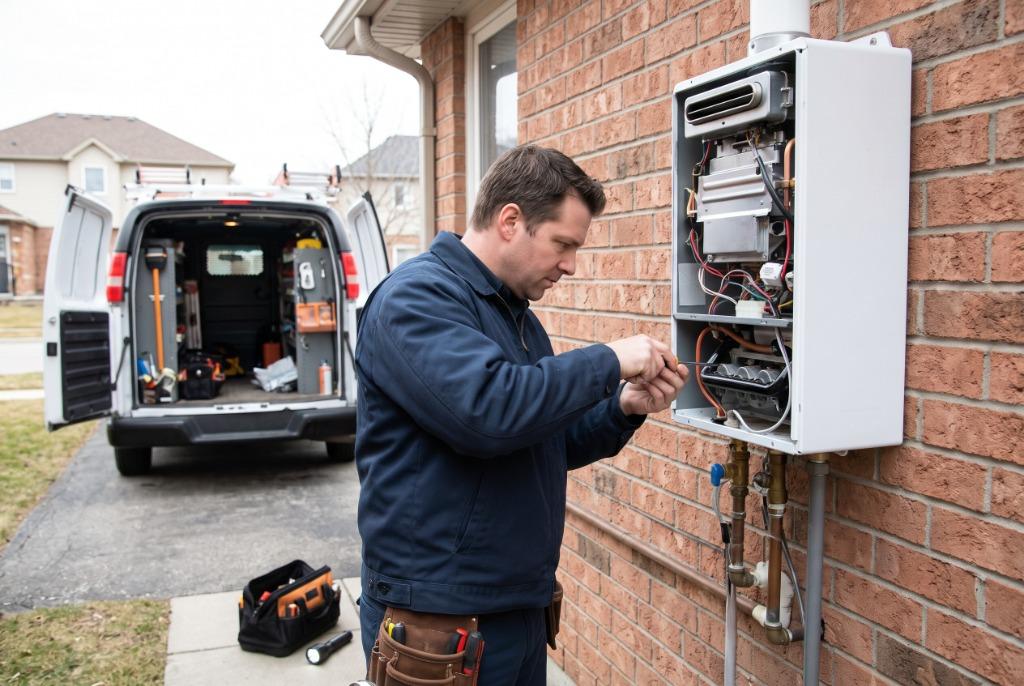
- Condensing tankless units produce 1 to 2 gallons of water per day that will freeze if routed outdoors.
- Ice blockages trigger safety lockouts (Navien E029/E030, Rinnai Code 25).
- Electric freeze heaters only work when the unit has uninterrupted electrical power.
- Always route condensate lines to indoor drains and insulate exposed piping.
During Colorado winters, temperatures across the Front Range can plummet from 60°F on a mild afternoon down to -15°F overnight with 50 mph Arctic wind gusts. For homeowners with modern condensing tankless water heaters, these sudden deep freezes present a unique vulnerability that conventional tank heaters never had: frozen condensate drain lines and draft freezing.
Why Do Condensing Tankless Heaters Produce Water?
Modern ultra-high efficiency tankless units (boasting 0.95+ UEF ratings) extract so much heat from burning gas that moisture in the exhaust flue cools below its dew point (roughly 130°F) and condenses into liquid water inside a secondary stainless steel heat exchanger.
A typical condensing heater produces 1 to 2 gallons of acidic condensate water every single day. This water drains out through a small 1/2-inch or 3/4-inch PVC drain pipe. In many Colorado homes, especially installations done through rim joists or crawl spaces, this drain line runs along uninsulated exterior foundation walls or terminates directly outside into the snow.
The Anatomy of a Freeze Lockout
When sub-zero winds strike, standing drops of water in an uninsulated drain pipe freeze into solid ice. Once the drain is plugged with ice, newly formed acidic condensate has nowhere to escape.
Water begins backing up into the internal condensate trap. As the water level rises into the secondary combustion chamber, a safety float switch trips, cutting power to the gas valve. The unit shuts down immediately and flashes error codes (such as Navien E029, E030, or Rinnai Code 25). The homeowner is left with zero hot water in the middle of a blizzard.
Cold-Weather Draft Freezing in Unpowered Units
Tankless water heaters feature motorized draft vents that connect directly to the outdoors. When the unit is plugged into electrical power, internal electric ceramic heating blocks continuously warm the internal waterways whenever ambient temperatures dip below 38°F.
However, if a winter power outage occurs—common during heavy wet spring snowstorms in Monument and Woodland Park—those electric freeze heaters lose power. Cold outdoor air can be drawn backward down the exhaust pipe, freezing water trapped inside the copper heat exchanger within just 3 to 4 hours, causing copper pipes to burst.
How to Protect Your Tankless System This Winter
Here are the four essential preventative measures our technicians recommend for all Colorado Springs homeowners:
1. Insulate and Route Condensate Lines Internally: Never allow condensate drain lines to discharge directly outdoors into sub-zero air. Drain lines should discharge into an indoor utility sink, floor drain, or laundry standpipe fitted with a condensate neutralizer.
2. Install Self-Regulating Heat Tape: For any section of drain or water piping traversing an unheated garage or vented crawl space, wrap the pipe in UL-listed self-regulating heating cable covered by closed-cell polyethylene foam insulation.
3. Add Wind Baffles & Backdraft Dampers: In windy zones like Falcon and Rockrimmon, ensure exterior concentric vent terminations feature certified wind hoods to prevent frigid drafts from infiltrating the cabinet.
4. Battery Backup for Freeze Heaters: Consider keeping your tankless unit connected to an uninterruptible power supply (UPS) so internal ceramic freeze heaters stay energized during local power outages.
Conclusion & Professional Recommendations
If your tankless unit freezes or locks out with a condensate drainage error during a cold snap, do not use an open flame torch to thaw pipes. Call our 24/7 Colorado Springs emergency response team for rapid, safe thawing and diagnostic recovery.
Related Services & Local Coverage:
Need Diagnostic Help on Your Tankless System?
Call our local Colorado Springs dispatch line. No waiting for email or form replies—speak directly with an on-call technician.
What Callers Should Have Ready For Fast Diagnosis:
Continue Reading
View All 10 Guides →Navien Error Code 003 vs 012: Ignition Troubleshooting in Colorado Springs
Waking up to cold water and a flashing E003 or E012 error on your Navien tankless display? Here is an expert breakdown of why these ignition faults happen at high elevation and how to resolve them safely.
Why Tankless Water Heaters Need Altitude Derating Above 6,000 Feet
Planning or troubleshooting a tankless water heater along the Colorado Front Range? Learn why atmospheric derating above 6,000 feet changes gas sizing, flow capacity, and combustion safety.
Colorado Springs Hard Water Guide: How Mineral Scale Destroys Heat Exchangers
Discover why Colorado Springs water chemistry accelerates heat exchanger calcification, how to recognize early signs of scale restriction, and the best preventative solutions.