Tankless vs Tank Water Heaters: High-Altitude Efficiency Comparison for 2026
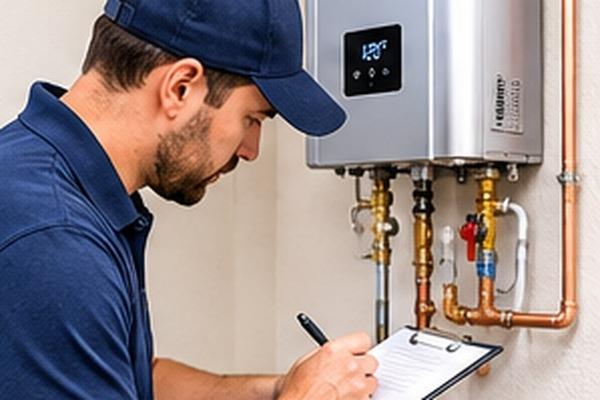
- Tanks lose 15-25% of energy to standby heat loss in chilly Colorado basements.
- Condensing tankless units achieve up to 0.96 UEF compared to 0.60 UEF for tanks.
- Tankless units last 18-25 years—more than double the lifespan of standard tanks.
- Proper installation requires 199k BTU sizing and annual descaling commitment.
For decades, the standard 40- or 50-gallon atmospheric gas water tank was the default fixture in every Colorado basement. However, rising natural gas utility rates and stricter federal energy efficiency standards have accelerated the shift toward on-demand tankless water heaters. If you are debating whether to replace your failing water tank with another tank or make the leap to tankless, here is the unvarnished data tailored specifically to Colorado Springs.
The Standby Heat Loss Reality in Colorado Basements
A conventional storage tank functions like an enormous tea kettle that never shuts off. It keeps 50 gallons of water heated to 120°F to 130°F 24 hours a day, 365 days a year—even when you are sleeping, at work, or on vacation.
In Colorado Springs, where unfinished basements regularly drop to 50°F or lower in winter, the temperature differential between the hot water tank and ambient air causes rapid standby heat loss. The burner fires repeatedly throughout the day just to reheat water you haven't even used, wasting between 15% and 25% of your total gas consumption.
Efficiency Metrics: 0.58 UEF vs 0.96 UEF
The Department of Energy measures water heater efficiency using the Uniform Energy Factor (UEF).
• Standard Atmospheric Tank Water Heater: 0.58 to 0.62 UEF. For every dollar of natural gas burned, roughly 40 cents is lost up the metal chimney flue as wasted hot exhaust.
• Modern Condensing Tankless Unit (e.g. Navien NPE-2 series): 0.95 to 0.97 UEF. Over 95 cents of every fuel dollar is transferred directly into your domestic hot water. The exhaust is so cool that it can be vented safely through inexpensive PVC or polypropylene plastic pipes.
Head-to-Head Comparison: Tankless vs Tank
Let's compare the key parameters side by side:
• Continuous Hot Water: Tanks run out after 2 or 3 back-to-back showers. Tankless provides continuous hot water as long as your gas and water supplies remain active.
• Physical Lifespan: Conventional tanks last 8 to 11 years before tank corrosion leaks mandate replacement. Quality tankless units last 18 to 25 years with annual maintenance.
• Physical Space: A tank occupies 16+ square feet of valuable basement or mechanical room floor space. A tankless unit mounts neatly to the wall, freeing up entire storage areas.
• Catastrophic Flood Risk: A rusted tank can rupture and dump 50 gallons of scalding water onto your finished basement carpet within minutes. Tankless units have no storage reservoir to rupture.
The Honest Downsides of Tankless in Colorado
To make an informed decision, you must also understand the upfront challenges:
1. Higher Initial Installation Cost: A tankless conversion requires dedicated 3/4-inch gas line sizing, new direct-vent PVC penetrations through your foundation, and a dedicated 120V electrical outlet. The initial investment is higher than a quick tank swap.
2. Winter Temperature Rise Demand: Because Colorado Springs winter groundwater can be 37°F, you must purchase a high-capacity (199,000 BTU) unit to support simultaneous showers.
3. Mandatory Annual Maintenance: You cannot ignore a tankless unit. Annual chemical descaling is required to manage Front Range hard water.
Conclusion & Professional Recommendations
If you plan on remaining in your Colorado Springs home for more than 4 to 5 years, the combination of lower gas bills, double the lifespan, endless showers, and reclaimed floor space makes a tankless conversion an exceptional long-term value.
Related Services & Local Coverage:
Need Diagnostic Help on Your Tankless System?
Call our local Colorado Springs dispatch line. No waiting for email or form replies—speak directly with an on-call technician.
What Callers Should Have Ready For Fast Diagnosis:
Continue Reading
View All 10 Guides →Navien Error Code 003 vs 012: Ignition Troubleshooting in Colorado Springs
Waking up to cold water and a flashing E003 or E012 error on your Navien tankless display? Here is an expert breakdown of why these ignition faults happen at high elevation and how to resolve them safely.
Why Tankless Water Heaters Need Altitude Derating Above 6,000 Feet
Planning or troubleshooting a tankless water heater along the Colorado Front Range? Learn why atmospheric derating above 6,000 feet changes gas sizing, flow capacity, and combustion safety.
Colorado Springs Hard Water Guide: How Mineral Scale Destroys Heat Exchangers
Discover why Colorado Springs water chemistry accelerates heat exchanger calcification, how to recognize early signs of scale restriction, and the best preventative solutions.